
"Grade 5"
5000 article(s) found
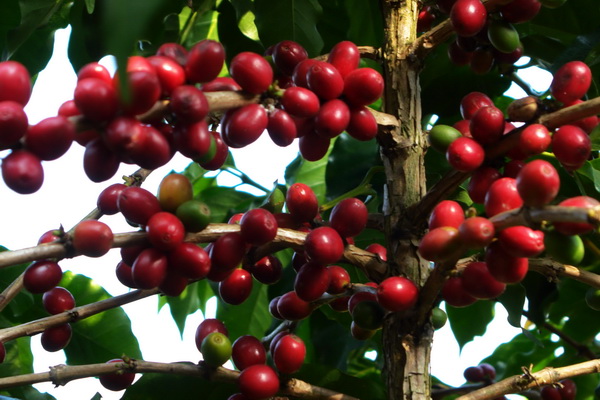
African flavor Ethiopian grade G1G2 G3 boutique coffee beans
Pre-auction process 1) farmers pick fresh coffee fruits; 2) farmers transport fresh fruits to rural cooperatives; 3) cooperatives sell fresh fruits to middlemen; 4) middlemen collect and transport fresh fruits to processing plants (washing or tanning process); 5) middlemen transport processed beans (with shell beans, Parchment Coffee) to auction houses to establish warehouses; 6) auction houses give official evaluation (
Indonesian coffee grade-
Professional coffee knowledge exchange more coffee bean information please follow the coffee workshop (Wechat official account cafe_style) Republic of Indonesia (Indonesian: Republik Indonesia, English: Republic of Indonesia), referred to as Indonesia (Indonesia). It is a Southeast Asian country with Jakarta as its capital. With countries such as Papua New Guinea, East Timor and Malaysia

Coffee bean classification Yega Xuefei grade classification
Egyptian beans are named after places of origin and are usually named after provinces. This is a bit like the Bordeaux region of French red wine. Which producing areas are clear to everyone. Note: Chevy is a small producing area in Sidamo Province. Because of its unique flavor, it can become an independent brand. This naming method is very different from that of other African countries (including the hierarchical naming described below), which you often see.

Ethiopian coffee beans
General requirements: The moisture content of sun-dried coffee beans should not exceed 11.5% by weight, and at least 85% of the beans remain above 14 mesh after sifting. (This is why Egyptian beans don't look good: 14 + means 14, 15, 16, 17, 18, etc. mixed together, beans must be uneven) Parchment Coffee Grades: 1, 2, 3, 4, 5, 6, 7, 8, 9
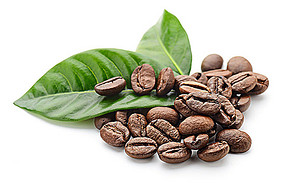
The grade of caffeine in Ethiopia
Following Cafe (official Wechat account vdailycom) found that Beautiful Cafe opened a small shop of its own background Ethiopia's coffee bean grading standards are supported by the American Professional Coffee Association. But remember, Ethiopia is a coffee producer, so why can't Ethiopia set its own standards?-in 2008, Ethiopia held a formal coffee trading center.
The ranking system of raw beans in coffee producing countries introduces what is the best grade of coffee beans.
Ethiopia (rated in proportion to defective beans) before the emergence of the Ethiopian Commodity Exchange (Ethiopia Commodity Exchange referred to as ECX), Ethiopia's coffee export grade was established by the CLU Department (Cupping and Liquoring Unit) under the Ministry of Agriculture, mainly according to the number of defective beans in 300g. The classification criteria are as follows.

Egyptian beans are named according to origin, coffee beans are classified according to grades, raw beans, coffee beans.
Egyptian beans are named after places of origin and are usually named after provinces. This is a bit like the Bordeaux region of French red wine. Which producing areas are clear to everyone. Note: Chevy is a small producing area in Sidamo Province. Because of its unique flavor, it can become an independent brand. This naming method is very different from that of other African countries (including the hierarchical naming described below), which you often see.
What does G1MagneG2 stand for in coffee? how to distinguish the grades of Ethiopian coffee beans?
In order to distinguish between good quality coffee beans and poor quality coffee beans, manufacturers have to grade coffee. Coffee is usually graded according to the defect rate and the size of beans.
A brief introduction to the grading system of coffee beans in Ethiopia
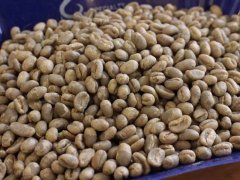
In this age of flamboyant clothes, beautiful masks and expensive silicone, Egyptian beans are obviously not the kind of people who can't resist your appearance. The long and thin bean shape, coupled with its uneven size, always feels a little born with stunting. Fortunately, God is also fair. Egypt beans, which have no outstanding appearance, have rich connotations (so do many ugly people.

Basic knowledge of coffee beans the grading system of Ethiopian coffee beans
In this age of flamboyant clothes, beautiful masks and expensive silicone, Egyptian beans are obviously not the kind of people who can't resist your appearance. The long and thin bean shape, coupled with its uneven size, always feels a little born with stunting. Fortunately, God is fair, and the Egyptian beans without outstanding appearance have rich connotations (so do many ugly people.

A brief introduction to the grading system of coffee beans in Ethiopia
In this age of flamboyant clothes, beautiful masks and expensive silicone, Egyptian beans are obviously not the kind of people who can't resist your appearance. The long and thin bean shape, coupled with its uneven size, always feels a little born with stunting. Fortunately, God is fair, and the Egyptian beans without outstanding appearance have rich connotations (so do many ugly people.
General knowledge of coffee bean grading A brief introduction to the grading system of coffee beans in Ethiopia
In this age of flamboyant clothes, beautiful masks and expensive silicone, Egyptian beans are obviously not the kind of people who can't resist your appearance. The long and thin bean shape, coupled with its uneven size, always feels a little born with stunting. Fortunately, God is fair, and the Egyptian beans without outstanding appearance have rich connotations (so do many ugly people.
A brief introduction to the grading system of coffee beans in Ethiopia
The evaluation criteria of Egyptian beans were developed with the assistance of the American Fine Coffee Association (SCAA). (why can't Egypt, as the home country of coffee, formulate it independently? Yeah! Think about it)-Egypt fully implemented a central auction system in 2008 (used to be purchased by exporters)-briefly talk about some pre-auction processes. 1) Farmers pick fresh coffee fruit; 2) Farmers take fresh coffee
Tanzania coffee beans
Tanzania Coffee Bean Type Grade Mbinga-producing region (suboptimal) 1.SC3 1 2.SC11 2 3.SC14 3 4.KP 423 Local 4 5.SC 9 N/A The table below shows the characteristics of the varieties of Tanzania coffee beans compared to the standard coffee varieties. Total grade SC3 SC11 SC14 KP423 Local 1. High yield 5 4 3 2. Marketable 5 5 4 19 2

The meaning of fine coffee concept and classification What grade of coffee beans are fine coffee
Professional coffee knowledge exchange More coffee bean information Please pay attention to coffee workshop (Weixin Official Accounts cafe_style)(This article is extracted from Zhuo Weimin's book to explore the secrets of fine coffee. It cannot be reproduced and quoted without permission.) Definition of fine coffee Unique coffee varieties are planted in special growth areas. Varieties derived from Arabica species such as Typica and Bour.

Ethiopian Coffee Bean grading Standard-explanation of Ethiopian Coffee Bean Export auction process
Professional coffee knowledge exchange more coffee bean information Please follow the coffee workshop (Wechat official account cafe_style) the evaluation criteria of Ethiopian coffee beans were formulated with the assistance of the American Fine Coffee Association (SCAA) (why can't Ethiopia, as the home country of coffee, be independent? Yeah! Think about it)-Egypt fully implemented the central auction system in 2008.

Introduction to the method of flavor description and taste treatment of coffee raw bean grade G1 growing environment
Coffee raw bean grade G1 growing environment flavor description taste treatment method introduces the representative countries: Brazil, Indonesia, Ethiopia, Cuba, Peru and so on. The method is to randomly take 300 grams of samples and put them on black paper, and different defects correspond to different points, such as 1 point for 1 pebble, 5 points for 1 big pebble, 1 point for 5 broken beans, and 1 point for 5 pest beans.

What are the classification standards of coffee beans G1, G2, G3, G4, AA, PB, SHB?
Professional coffee knowledge exchange More coffee bean information Please pay attention to coffee workshop (Weixin Official Accounts cafe_style)

Introduction of coffee cup: standard Italian five-in cup Eepresso coffee cup high-grade bone porcelain material
Brand YAMI Origin [name]: standard Italian five-in cup [material]: high-grade bone porcelain [capacity]: 100cc [cup height]: 5.2cm cup mouth diameter: 6.2cm disc diameter: 13cm [weight]: net weight 266g [gift box gross weight]: 2.5kg [packaging]: 5 cups and 5 plates [introduction to bone porcelain]: bone porcelain was formerly known as bone porcelain, referred to as bone porcelain, that is, bone powder mixed with quartz
Classification standard of raw coffee beans
There are two ways to classify raw coffee beans, one is the filter number, and the other is the elevation.